U.S. Living History with IEW
This year, I’m integrating living history with my IEW U.S. History-Based Writing class that meets in person. It’s been a while (okay, really only a year or two) since I’ve taught literature alongside IEW, but I am truly looking forward to having roundtable discussions using these amazing American History stories!
Some of the links in this post are affiliate links, which means I may earn a small commission if you purchase them, at no extra cost to you.
That said, I truly believe that homeschooling should be for everyone, so if the cost of books concerns you, please know that you can always access books at your local library, using an online public library like archive.org, or, when applicable, on Project Gutenberg (books out of copyright).
First Semester
In the first semester, students explore the foundations of American history from Native American life before European contact to the challenges of colonial living and the fight for independence during the American Revolution. In class, we will cover four books from multiple perspectives, so students can really dive into the living history portion of class by engaging with Native Americans and European colonist characters.
If you’re reading these at home, I suggest reading aloud or together as a family. That said, please note that these books were specifically chosen for middle-grade readers, so always check for age-appropriateness as it pertains to your household.
Here are the books we’re covering this fall:
Children of the Longhouse by Joseph Bruchac

Time Period: Pre-colonization (Late 1400s)
Description: Set in a Mohawk village in the late 1400s, Children of the Longhouse follows twin siblings as they navigate family responsibilities, peer pressure, and questions of right and wrong within their community.
Through engaging storytelling, students gain insight into the daily life, traditions, and values of the Iroquois people before European contact. The novel emphasizes themes such as integrity, courage, leadership, and respect for others.
This book offers students a meaningful opportunity to explore early American history while also examining character development and moral decision-making in a culturally rich setting. It is appropriate for upper elementary students and supports thoughtful classroom discussion.
Sign of the Beaver by Elizabeth George Speare

Time Period: Colonial America/Early Frontier (Early-Mid 1700s )
Description: Set in the wilderness of colonial Maine in the late 1700s, The Sign of the Beaver follows a young settler boy who is left alone to survive while his family returns to bring the rest of their household. As he struggles to endure the challenges of frontier life, he forms an unexpected friendship with a Native American boy who teaches him essential survival skills.
Through this story, students explore early American frontier life and the interactions between settlers and Native Americans. The novel highlights themes of responsibility, perseverance, cultural differences, and mutual respect.
This book encourages meaningful discussion about independence, what it means to be “civilized,” and how people from different backgrounds can learn from one another.
Night Journeys by Avi

Time Period: Colonial Period – Pre-American Revolution (1768)
Description: Set in colonial America in 1768, Night Journeys follows a young boy who escapes indentured servitude and seeks refuge with a kind Quaker family. As he recovers from hardship, he must decide whether to remain hidden or risk everything to pursue freedom.
Through this story, students are introduced to aspects of early American life, including immigration, labor, and the diverse communities present before the Revolutionary War. The novel explores themes of courage, trust, forgiveness, and the search for belonging.
This book encourages thoughtful discussion about personal choices, resilience, and treating others with compassion.
Give Me Liberty by L.M. Elliott

Time Period: American Revolution (1773-1776)
Description: Set in Williamsburg, Virginia, during the early years of the American Revolution (1773–1776), Give Me Liberty follows a young indentured servant girl seeking freedom in a time of growing political unrest.
As tensions rise between the colonies and Great Britain, she becomes involved in the lives of prominent figures and must navigate questions of loyalty, justice, and personal responsibility. Through her journey, students encounter key ideas and events leading up to the Revolution while considering the meaning of liberty and sacrifice.
This novel offers an engaging introduction to Revolutionary America and encourages discussion of courage, perseverance, and the pursuit of freedom. It is appropriate for upper elementary students and supports thoughtful exploration of historical and moral themes.
Second Semester
In the second semester, we shift our focus to how the nation grows and changes after gaining independence. Students will follow the journey of Americans as they move westward, seek new opportunities, and build lives on the frontier. Through these stories, we examine the challenges of expansion, the importance of perseverance, and the development of American identity.
This progression allows students to see history as a continuous story moving from the founding of a nation to the people and experiences that shaped its growth.
By the Great Horn Spoon! by Sid Fleishman

Time Period: Westward Expansion & California Gold Rush (1849)
Description: Set during the California Gold Rush of 1849, By the Great Horn Spoon! follows a young boy and his resourceful companion as they journey from Boston to California in search of fortune. Along the way, they encounter unexpected challenges, clever schemes, and memorable characters as they travel by sea and across the rugged frontier.
Through this adventurous and humorous story, students explore an important period of American expansion, when thousands journeyed west in hopes of opportunity and a better life. The novel highlights themes of perseverance, ingenuity, friendship, and determination in the face of difficulty.
This book offers an engaging introduction to the Gold Rush while encouraging discussion about hard work, problem-solving, and what it truly means to succeed.
Elijah of Buxton by Christopher Paul Curtis

Time Period: Pre-Civil War (1859)
Description: Set in 1859 in the free Black settlement of Buxton, Canada, Elijah of Buxton follows an eleven-year-old boy who was born free after his parents escaped slavery in the United States. Known in his community for being sensitive and cautious, Elijah embarks on a journey that challenges him to grow in courage, responsibility, and maturity.
Through Elijah’s experiences, students gain insight into life in a community formed by formerly enslaved individuals, as well as the realities of slavery and the risks many took to seek freedom. The novel provides a meaningful perspective on the years leading up to the Civil War, highlighting both the hardships faced and the strength found in faith, family, and community.
Appropriate for middle-grade students, this book encourages thoughtful discussion about courage, justice, compassion, and what it truly means to be free.
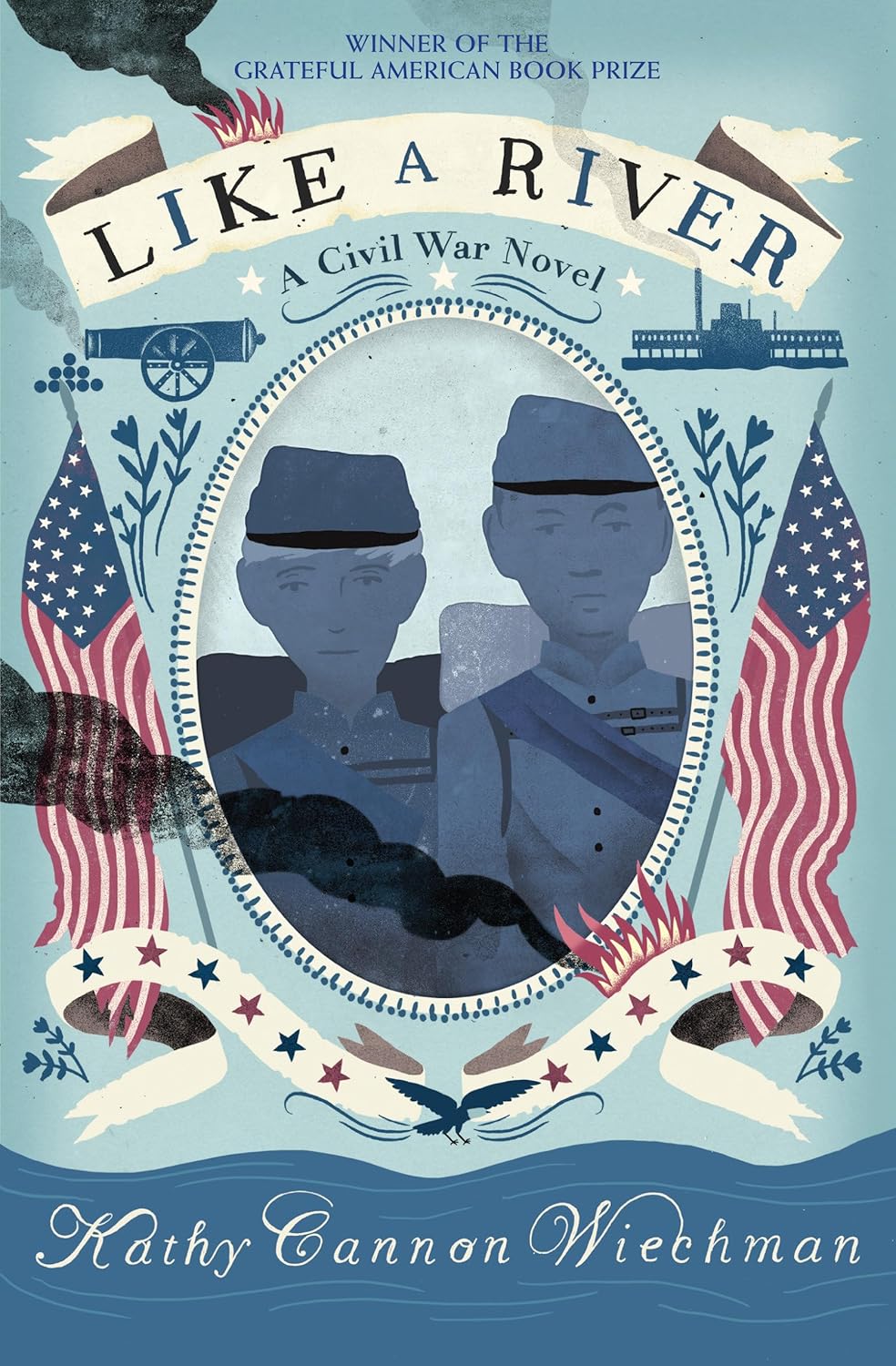
Like a River: A Civil War Novel by Kathy Cannon Wiechman*
* Amazon is currently selling the hardback and Kindle options of this book only. I strongly suggest getting this book from your local library or reading it on archive.org HERE. I will update with more information regarding the paperback once I know more.
Time Period: American Civil War (1861-1865)
Description: Set during the American Civil War, Like a River follows the experiences of several young Union soldiers as they endure the hardships of war, imprisonment, and survival. Based on real historical events, the novel provides a powerful glimpse into the challenges faced by soldiers during one of the most defining conflicts in American history.
Through multiple perspectives, students gain insight into the realities of war, including courage, sacrifice, and the importance of perseverance in the face of adversity. The story also highlights themes of loyalty, friendship, and the strength required to endure difficult circumstances.
Appropriate for middle-grade students, this novel encourages thoughtful discussion about the causes and consequences of the Civil War, as well as the personal character required to navigate hardship with integrity and hope.
Cheaper by the Dozen by Frank B. Gilbreath Jr.

Time Period: Early 1900s
Description: Set in the early 1900s, Cheaper by the Dozen tells the true story of the Gilbreth family and their twelve children. Through humorous and engaging anecdotes, students are introduced to a lively household where creativity, efficiency, and strong family values shape everyday life.
While lighter in tone than other course readings, this memoir offers valuable insight into American family life during a time of growing modernization and change. Students explore themes of teamwork, discipline, innovation, and the importance of balancing structure with joy.
Appropriate for middle-grade students, this book provides a refreshing conclusion to the course while encouraging discussion about family dynamics, personal responsibility, and the role of creativity in problem-solving.
Of course, there’s more to living history than just the books we read.
To bring history alive, it’s important to help students connect to the time period they’re learning about. This can be done with interactive elements such as hands-on learning in the kitchen, taking field trips to local historical sites, or learning the geography of a place.
How does YOUR family incorporate living history into your homeschool?